Saturday, July 17, 2010

A Special Report from the Phantom Zone : Summer Movie Issue

The Aishmans' Summer Movie Review
The Aishmans' review movies on a flight to Korea.

Thursday, July 01, 2010

A Report from the Phantom Zone

Confessions of an Art Nerd

Throughout my life I have been called a nerd.
This has always been fine for me because I am a nerd. In fact I am multiple types of nerd.

To make things a worse, I seem to live in a perpetual state of Nerd Rage.

Statements that have sent me into nerd rage:

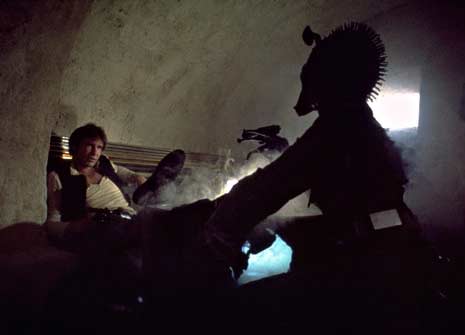
"Greedo shoots first." (SW nerd)

"Selig should overturn Joyce's call to give Galarraga the perfect game." (Sports nerd: not considered a type of nerd by many, but should be classified with other nerds.)

"Mac servers are now more stable than UNIX servers." (Tech nerd)

"Dio didn't invent the "devil horns" hand gesture, it was Motley Crue."(Metal nerd)

"The 1969 Mustang's engine is as well built as the '69 Charger's." (Car Nerd: again, not considered a type of nerd by many, but should be classified with other nerds.)

"Tasha Yar died for no reason." (Star Trek nerd)

"Pine is fine for most furniture needs."( Carpentry nerd.)

"Gimli was just there for comic effect." (Middle Earth nerd)

"Granule fertilizer works as well as liquid fertilizer." (Gardening nerd.)

"The Silver Line can get you to the Airport as fast as the T."(Boston nerd)

"X-Men Origins: Wolverine was a pretty good movie." (X-nerd)

"Baldessari Sing's Lewitt" has proven to be more influential than "Paragraphs on Conceptual Art." (Art nerd)

For some reason, very few people admit to being art nerds. I once called someone and art nerd and she was truly offended.

"I'm not a nerd, I'm a curator." she replied.
"Yeah, I pretty sure that's just someone who is a paid to be an art nerd." I said.
I have witnessed far more nerd rage over art than Star Wars.

I have seen two people, both in thousand dollar Gucci shoes, yelling at each other at an opening that Damien Hirst is crap (the strange thing is that they agreed with each other, just the extent to which he is crap!) I have seen two art historians almost come to blows over whether or not Hill and Adamson's calotypes of the village of New Haven in 1843 should be considered documentary work.

An opening is nothing more than a meeting of art nerds.
The Venice Biennale is the art nerd version of Comic-Con.
Big Red is New England's art nerd forum.
If you have any example of art nerd rage, please list them in the comments below.


"Baldessari Sing's Lewitt"


Han shoots first

Monday, May 17, 2010

A Report from the Phantom Zone

Some texts I or my friends have received during or after art openings.
In no particular order.

1)This work is so bad. This wine is so bad. So many reasons to puke tonight. I'm going to puke tonight. Just puked.

2)Opening's warming up, a tranny just got here...

3)Artist statement is hippie crap all "harnessing positive energy". Fuck positive energy. I choose drinking instead

4)is your mom at the gallery?

5)Ha. Yes. I ditched the openings. I'm at a strip club. I'm the barack obama of strip clubs

6)Why'd you bring her here? Your girlfriend is such a south jersey whore

7)I hate your face. I heard we made out

8) you never wrote back on my facebook wall

9) I quit. all artists suck. signing up for eharmony. Don't judge

10) Fucking hipsters really piss me off man. They are just such punk as bitches, all of them. Oh, and fuck Ed Hardy too.

11) That's just how i roll, and this dress she is wearing is dirty and needs to get pulled over her head.

12)Can't get out of the opening. Every time I try to leave, I have to say bye to someone else for like a 5 min. conversation.

13) yo i stole a wine glass from the party next door but i spilled wine on my hundo dolla shirt

14) this art is predicting the future and apparently in the future we'll all be gay

15)I mean a good dj is a huge turn on

16) your dad is the best wingman ever

17)you dirty dirty liar I like the way you twitter

18) we're facebook friends in real life

19) You'd love this place it's beautiful. Plus these people smell like garlic

20) Needless to say when I told my parents they loved me less

21) Homeslice needs to figure out he's so 2006

22) So I'm looking at this sculpture and some guy came up looks at my boots and goes, "you should've got the boots with the fur"

23) WTF is with this opening? We are surrounded by old people. Heavens waiting room for sure.

24) I'm so fucking centered right now

25) I'm gunna smoke cigs today. I feel like I'm in that powerful and gritty mood which requires them

26) she has a tiny mouth but huuuge vocal chords

27) I took shrooms and thc before coming out, but its okay i'm surrounded by freaks

28) I only want to know people that are dynamic intelligent and totally insane

29) Those kids are glorified dude-bros. It's banal.

30) More tranny stories later!

31) Why do girls always cry in front of galleries? Are they having an exestensial crisis at the gallery?

32) I wish I could punch you in the face.

33) if you dont talk to me in person you cant text me

34) You're mentally unstable and I would hate to be you

35) Ppl just aren't as funny as we are

36) the sham wow guy got arrested for beating up a hooker.

37) It's not a performance piece. Its a bunch of hippies dancing in front of a stobe light. For ten dollars I could have gone to the strip club and at least had a lap dance

38) Youre a pretentious asshole and im not sure who you think you are. Get the hell over yourself and the self righteous culture snob image because its pretty obnoxious.

39) This gallery smells like vodka and shame

40) remember facepaint boy? turns out it stains. aaaand i have it all over my face and neck.

41) i'm pretty confident that i watched a woman making love to a german shepherd.

42) Ha. No worries! So loud here &god I love drag queens! How does it happen, the congealing?

43) Real busy. everything is packed. thats why we ended up at the strip club

44) I'd rather drink alone in my closet than hang out with that artist

45) that chick doesn't look like she's put anything in her mouth for weeks other than his dick.

46) Cool, I just put that together. I didn't know if using a tie-died sub machinegun was too crazy

47) A big part of growing up is learning how to tastefully stare at women

48) No one appreciates an amoeba in a balloon hat.

49) I wish my penis had an off switch

50) I'm pounding a vodka drink as we speak to make her interesting

51) I hate you but I'm not in hate with you

52) Drawing on your hand and calling it art is crap!

53) Well I thought that next 8 ball would either kill us or turn us into Gods

54) she asked me if the dress made her look fat, i told her no - the fat made her look fat.

55) im ready to get crazy and take my wig off

56) Any chance you got 3000 bucks on you?

57) someone just threw a dead crab at me

58) it was nice. we just kind of hung out. she didnt even mention the farting incident.

59) Holy cold harsh reality of bad art batman

60) It really wasn't that bad. Well, it was pretty bad, but only in 3 second bursts.

See more texts from last night here

Do you have some texts from art openings that you'd like to share? Add them to the comment section:

The Sham Wow Guy:


A Brian Berman Furry Photo

Sunday, April 25, 2010

A Report from the PhantomZone

The Budget Biennial
By Steve Aishman April 25, 2010

JP Morgan is where Jesus saves. Sometimes
I buy RH Quaytman’s work and the rest
of the Whitney. It’s not for sale. No sound
to hear in this grab ass scene. Gary’s so broke
he buys pot by the pound. I’m Rihanna’s rebound.

That's not my gun? The Bruce High Quality
Foundation
is not God’s own creation.
The Museum is broke! We’re shakin’
in shit! There’s no architecture to see
in Frecon. Hell, I eat paint like Bacon.

It was love at first sight, so I looked again.
Art is for shoppin’, we poppin’ champagne.
This show is a joke, this show is on crack.
When you spend more, you’ll earn more cashback.

Charles Ray is chokin’. It's intoxication!
Don’t give a damn ‘bout my bad reputation.
Francesco Bonami can’t find the new,
so when I drink, I drink Mtn Dew.


Suzan Frecon, embodiment of red (soforouge), 2009.

Sunday, April 11, 2010

A Report from the Phantom Zone

While on a hike in the deep woods of Brooklyn, I found some split open trash bags with paper pouring out. Covered in dried blood and with multiple missing pages, I saw it was a journal/tactical notebook/garbage. Here is some of the reconstructed text as far as I could assemble it:

Modernist Painting and the Undead Plague
By Dr. Hide and Mr. Greenberg
1960/2010

Modernism includes more than art, literature and zombies. By now it covers almost the whole of what is truly alive in our culture and with the recent resurgence of walking dead; most of what is undead in our culture as well. It happens, however, to be very much of a historical novelty as most of civilization is now in full decay due to the rapid speed at which the plague is spreading. Western civilization is not the first civilization to turn around and question its own foundations, but in a desperate attempt to understand how things could have gone so wrong, Western civilization is the one that has gone furthest in doing so. I identify Modernism with the intensification, almost the exacerbation, of this self-critical tendency that began with the philosopher Kant. Because he was the first to criticize the means itself of criticism, I conceive of Kant as, the first real Modernist and either the first zombie killer or in fact, as some have surmised, the patient zero of the zombie plague that currently threats all of civilization.

The essence of both Modernism and the solution to the zombie plague lies, as I see it, in the use of characteristic methods of undead extermination to criticize the discipline of zombie killing itself, not in order to subvert it but in order to entrench it more firmly in its area of death dealing competence. Kant used logic to establish the limits of logic, and while he withdrew much from its old jurisdiction, logic was left all the more secure in what there remained to it. However, history has now shown that Kant himself was blissfully unaware of the true power his incantations held and only generations later when Kant’s words were twisted and perverted by mystics like Schopenhauer and Sorcerer Supreme Nietzsche did the undead throngs begin to erupt in numbers to great to be stopped.

How can we forget “The Birth of Tragedy from the Spirit of the Undead” were Nietzsche wrote:

“The extraordinary courage and wisdom of Kant and Schopenhauer have succeeded in gaining the most difficult victory, the victory over the optimism concealed in the essence of logic—an optimism that is the basis of our culture.”

It was soon after Nietzsche’s declaration of the victory over optimism, the reports of walking dead in the local paper rose from a few occasional sightings that were frequently confused with people who were simply depressed or feeling ill; to the full blown plague of undead we now have to deal with on a daily basis. (Where they have come from is still not known, but the fact that their appearance so closely matches with the writings of Nietzsche who maintains a quasi-mystical control over the mindless zombies from beyond the grave, cannot be coincidental.)

The self-criticism of Modernism grows out of, but is not the same thing as, the criticism of the Enlightenment (The Enlightenment is the name historians have given to time directly preceding our Modern, zombie-plagued era when lycanthropes ruled the world through brutal, feral force. It was brave French revolutionaries who discovered that the only way to effectively kill the shape-shifting monarchy was to cut of their heads while they were in human form. Many revolutionaries fell before the claws of Louis XVI and his she-wolf bride Marie-Antoinette before the cursed family found their heads beneath the guillotine.) The Enlightenment criticized the ruling werewolf clans from the outside, the way criticism in its accepted sense does; Modernism has no choice but to criticize from the inside because most of society is now part of the zombie plague we are in fact trying to eradicate. It seems natural that this new kind of criticism should have appeared first in philosophy since most of the first zombies were philosophers who fell prey to their own dark magics, but as the 18th century wore on, it entered many other fields. A more rational justification had begun to be demanded of every formal social activity, and Kantian self-criticism began infecting and turning every other discipline.

[Pages too covered in blood to be read]

Zombie hunting in its latest phase has not abandoned the notion that zombies can be turned back into functioning human beings. What both Modernist painting and the art of zombie killing have abandoned in principle is the representation of the kind of space that recognizable objects or the undead can inhabit. To achieve autonomy, culling the undead has had above all to divest itself of everything it might share with normalized society that seeks to care for its sick and weak. The plague can not be turned back by trying to help those that have been turned and are now mindlessly undead, but must instead rely on the retrenching in the essence of the art of zombie killing set forth by those French that ended the age of “Enlightenment”: beheading. The undead are easily tricked, confused, trapped, hacked up, stabbed, lit on fire, and otherwise mangled, but only beheading truly represents the “pure” essence of zombie killing.

[Pages too shredded to be read]

Postscript (1978)

I want to take this chance to correct an error, one of interpretation and not of fact. Many readers, though by no means all, seem to have taken the 'rationale' of Modernist art outlined here as representing a position adopted by the writer himself that is, that what he describes he also advocates. This may be a fault of the writing or the rhetoric. Nevertheless, a close reading of what he writes will find nothing at all to indicate that he subscribes to, believes in, the things that he adumbrates. I in no way am implying that anyone’s head should be cut off. The writer is trying to account in part for how most of the very best art of zombie killing of the last hundred-odd years came about, but he's not implying that that's how it had to come about, much less that that's how the best art still has to come about. The philosopher or art historian who can envision me -- or anyone at all -- arriving at such violent judgments in this way reads shockingly more into himself or herself than into my article.


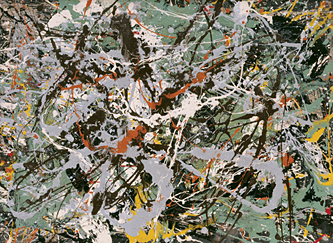
Jackson Pollock shortly before being eaten by a Zombie wedding party.


Blood splatters on paper


Jackson Pollock, Untitled (Green Silver), ca. 1949. on Paper


_________________________

Clement Greenberg's original "Modernist Painting" 1960 from which this was mashed up with zombie nonsense.

Saturday, March 27, 2010

A Report from the Phantom Zone: Art Dubai

It’s a 13-hour flight to Dubai.

Not the kind of travel to be taken lightly but worth it for the experience of Art Dubai. For visitors like me, Art Dubai represents more than the other fairs like the Armory Show or Miami Basel because the fair was the best excuse I could come up with to visit the Middle East. Like all art fairs, Art Dubai was primarily focused on sales, however, there was a consolidated effort by the fair to extend beyond the walls of the fair itself in order to become an entire art world event representing the region as a whole. Proof of this was in the number of the auxiliary programs, the many parallel events in the city that were directly supported by the fair, and the “Global Art Forum” lecture series that made the fair feel less like a sales driven event and more like an all encompassing cultural event. Art Dubai fully supported the Al Bastakiya Art Fair, the one official fringe art fair, by running a bus between the fairs and encouraging all visitors to spend time at both fairs. Art Dubai even ran programs in other cities like tours of the Sharjah Museum, or programs in Doha. The fair fully supported the START program, a Middle East based program that helps orphans, refugees and street children in the MENASA (Middle East North Africa South Asia) region, through creative development. While at the fair, I participated in one of START’s programs and helped introduce local autistic children to art-making and the fair itself.

While the fair is not in charge of what any individual gallery chooses to show, there were some excellent pieces on display. Some of the highlights included El Anatsui’s “In the World But Don't Know the World” piece at London’s October Gallery booth. El Anatsui’s metal sculpture made from tens of thousands of bottle-tops that evoked sublime awe at its sheer enormity while also provoking a dialog about the cultural, social and economic histories of West Africa.

By far, the most provoking and stimulating piece at Art Dubai was created by the winner of the Abraaj Capital Art Prize, Kader Attia and his curator Laurie Farrell. The Abraaj Capital Art Prize provides $1 million dollars in funding to three curator/artist pairs from MENASA to produce unique pieces for Art Dubai. Algerian born artist Kader Attia and curator Laurie Farrell produced “History of a Myth: Le Petit Dome du Rocher” which is an installation based in deep understanding of history and philosophy. In the piece, the viewer enters a darkened room to see a live camera feed projecting a sculpture of a bolt and nuts enlarged many times its size. The projection of the sculpture evokes the architecture of the Dome of the Rock and in so doing refers to Arab-Muslim history and all of the complexity of issues that surround representations of that history. The most amazing part of the installation is that it is an installation that cannot be accurately described in words, but a viewer must be in the room itself to feel the piece. Throughout the installation, there is a gentle breeze and sounds of nature that are subtly vibrating the sculpture and thus the projection as well. Kader Attia’s piece provides a peaceful space of contemplation where the viewer can mediate on the myriad of issues surrounding historical, architectural, political or aesthetic interpretations. The piece is simultaneously peaceful and provocative, troubling and soothing, pensive and visceral. Creating a piece that refuses to fit into any preconceived binary is definitely a piece that should not be missed.

Next year’s Art Dubai fair should be even bigger and more comprehensive than this years and is definitely worth 13 hour flight.


Kader Attia
History of a Myth: The Small Dome of the Rock, 2010
Video installation
© Photo: Alexzandra Chandler
Courtesy of Abraaj Capital Art Prize


El Anatsui
"In the World, But Don’t Know the World?”, 2009.
Aluminium and copper wire, 5.6 x 10 metres


Video of Steve Aishman at the VIP Patron's Preview of Art Dubai

Saturday, March 13, 2010

A Report from the Phantom Zone

Every hero becomes a bore at last.
-Emerson

I have never been able to throw. And I mean anything. I can’t throw a baseball, tennis ball, Frisbee, whatever. Don’t ask me to toss you a pen or a coin because you’re likely to have to spend more time reaching under the couch to try to find it than just asking me to walk it over to you. It’s also rather dangerous asking me to throw anything in your general direction because I could put your eye out, the eye of the person next to you or just break a lamp. I don’t even try to play sports where I have to throw because everyone just gets frustrated with me as they have to continually jump over fences or run across roads to retrieve my horribly targeted missiles. Dogs don’t even want to play catch with me because it is simply no fun.

However, I love to watch the Red Sox. I love watching Pedroia or Youkilis make perfect throw to first base and just beat out a runner by milliseconds. The problem is that now I have to apologize for enjoying watching someone make a great throw. I have to say something like, “I know it’s just a game, but I find it exciting and uplifting”. If I don't, someone will attack me. Someone will say something like, “That’s stupid.” “Baseball is a waste of time.” “If you like baseball then you’re clearly sexist.” Etc. Etc.

It used to be that enjoying something was a good thing. I remember when having a hero was something that was encouraged. Now if you say anyone is your hero, it opens up a floodgate of ridicule. A hero should be someone we can admire without apology, but most people have secret heroes. People we aspire to be like, but don’t dare tell anyone about.

The art world is a good example of this. Who would say that Damien Hirst is their art hero? He’s hugely successful and influential, but to say you want your career to be like his is an open invitation to being attacked. Marina Abramović’s show at MOMA just opened and it will feature a performance piece that will be the longest that she has performed a single solo piece. I would love to see the piece, but I would never say that a performance artist is a hero of mine because so many people hate performance art (usually without seeing it) and it takes too long to defend why I love performance art. This year’s Whitney Biennial is filled with great artists, but it is dangerous to say that you think of any of them as an art hero.

It’s possible that there are no more art heroes (or maybe heroes at all). No Michelangelos or Rodins who it is ok to call a hero in the art world. Someone to draw inspiration from … Someone to aspire to …

Is there someone you consider your art hero?
Someone you feel you don’t have to apologize for liking?

If so, please list them in the comment section.
(And if you’re really bold … leave your name!)


Marina Abramović


Damien Hirst

Sunday, February 28, 2010

A Report from the Phantom Zone

So I’m looking at Titian’s “Venus and the Lute Player” when I overhear a discussion being led by a teacher and some students:

Teacher - “What do you think this painting is about?”

Student A. – “It seems to be about whether beauty is better apprehended through sight or through sound.”

Student B. – “I think it’s just another example of pre-19th century art that assumes one single point of view of what beauty even can be. I mean seriously, another nude white woman as the object of beauty …”

Student A. – “I think you’re confusing social commentary with art. The piece is not supposed to be social commentary, it’s supposed to be beautiful. You can’t just substitute aesthetic beauty with irony and call it art the way a lot of artists try.”

Student B – “That may be true, but all standards of judgment are based at least in part in some kind of cultural bias. Beauty maybe the most biased of all and so without framing Titian’s biases we risk marginalizing and silencing virtually everyone else’s concept of beauty.”

Student A- “But it is too easy to just deconstruct the piece that way. Anyone who isn’t smart enough to build a building can spend their whole life simply burning them down. After deconstruction, there needs to be re-construction.”

Teacher –“So what can we do now to acknowledge the insight that all judgments are relative and context-dependant but still be able to move forward and appreciate this work of art?”

Student B –“ Why don’t we just use relative terms where the standards of judgment are not unilaterally applied as they were in the past, but explicitly stated and acknowledged to be immersed in the culture in which they arise.”

Student A –“ So we integral mode of criticism that includes context as an essential part of any judgment. Thus we can judge a piece based on the notion of beauty that exists in our culture. This allows me to make the judgment that Titian’s “Venus and the Lute Player” is more aesthetically beautiful than Duchamp’s “Fountain”. I can even go on to say that it is probably as provocative and controversial about notions of beauty because it does pose the question: Which is more beautiful, visual art or music?.”

Student B –“That sounds fine as long as everyone understands that the hierarchy you just created is inherently value free and that it is context driven. It has to be acknowledged that you are working with a continuum of sliding judgments and sliding contexts.”

Teacher – “Exactly, then we can move forward by understanding that we are no longer evaluating work based on one single standard, but there are some standards that have to be framed before the discussion can really begin.”


Titian’s “Venus and the Lute Player”


Duchamp’s “Fountain”.

Sunday, February 14, 2010

A Report from the Phantom Zone

“Art writing that attempts not to judge, and yet presents itself as criticism, is one of the fascinating paradoxes of the second half of the twentieth century." James Elkins


In 1970, Edmund Burke Feldman wrote a book called “Becoming Human Through Art” that proposed four elements of art criticism:
1. Description
2. Analysis
3. Interpretation
4. Judgment

The Feldman method of art criticism begins with description, where the art critic uses neutral language to describe 1. recognizable subjects, 2. visual elements and their qualities (form), and 3. technical qualities of a work of art. The second part of art criticism, analysis, consists of describing the relationship among the things that were previously listed. Interpretation is where the critic infers what the connections between various visual elements mean. Finally, judgment is where the art critic makes a statement about the value of a piece of work based on a stated context.

The central element of Feldman’s methodology of art criticism was the notion that clearly grounding criticism in a philosophy of art would allow the art critic to justify critical judgments.

Feldman used three types of art philosophy as examples of how to use his method of art criticism:

A. Feldman identified Formalism as an art philosophy that evaluates work based the importance of the formal qualities and the visual elements of art. Therefore, a formalist art critic will focus their criticism on the visual elements of a piece. The formalist art critic rejects interpretations that rely on symbols, subject matter, previous knowledge or viewer’s life experience and will judge the piece based on technical execution and visual organization.

B. Feldman identified Expressivism as an art philosophy that evaluates work based on how well it accomplishes the goal of communicating a specific set of ideas. Therefore, an expressivist critic would evaluate a piece based on its ability to arouse emotion.

C. Instrumentalism evaluates work based on the importance of the social intention of the work. Therefore, an instrumentalist critic will evaluate a piece based on how well it serves social institutions like the church, the state, business, politics, etc. and will reject art that develops from or depends on other art as inferior and self-serving.

Feldman’s goal in outlining his method of art criticism was fundamentally for educational purposes. Feldman once said, "what an art teacher does - whether in art appreciation or studio instruction - is essentially art criticism. That is, art teachers describe, analyze, interpret, and evaluate works of art during the process of instruction." (Feldman, Some adventures in art criticism, Art Education : Journal of the National Art Education Association, p.24)

For most of the artists I know that occasionally write criticism as well, Feldman’s basic concept of art criticism as a part of education still holds true. Artists write about art in order to learn more about their own practice and to codify their ideas. The act of analyzing someone else’s exhibition forces artists/writers to look much longer and harder than they might otherwise and to form connections they might not have seen. To a large extent, Big, Red and Shiny was founded on the notion of artists writing about art in order to improve their own practice.

It seems the goal of art critics who are not also artists may have a host of other goals. Some of the goals I see expressed in other art critics include:

1. Art Criticism for Philosophers: The desire to pioneer and delineate a new art philosophy. In other words, the desire to expand from Feldman’s three basic examples to employ new philosophies. (Arthur C. Danto seems to be an example of this type of critic.)
2. Art Criticism as Literature: The desire to use a work of art as inspiration for developing well-crafted or innovative writing.
3. Art Criticism as Politics: The desire to make a political statement through art criticism.
4. Art Criticism for Money: Participating the written branch of the economics of the art world.
5. Art Criticism for Fame: Writing so people will recognize the writer.
6. Art Criticism as part of Advertising: Writing to increase viewer participation in an exhibition.

Of course this is not an exhaustive link and most art critics have multiple goals as well. There are a number of websites that explain how to write criticism like eHow and others. But none of them emphasize the fact that goal of the writer should be clear. Similarly, the art philosophy or philosophies that the critic is using should also be clear. It should also be clear to the critic who is writing that it is in the area of judgment and application of art philosophy where reader of the criticism will either choose to enter a dialog about competing art philosophies or the discussion will descend into name calling. Any perceived crisis of art criticism seems to rest in the pularistic notion that opposing art philosophies can both be grounded in the sound application of equally empirical philosophies to works of art. When two equally grounded philosophies attempt to engage, the result can frequently descend into a cacophony.

So, for anyone interested in writing art criticism for any reason, know this: If you write criticism without judgment, it’s not criticism. If you choose to judge, back it up with a sound philosophy of art. After you publish what you write, get ready for someone to hate you and try to keep your philosophy down by yelling louder.

If you can think of any other reasons for writing art criticism or any philosophies that extend beyond Feldman’s examples, please post them in the comment section.

Good luck,
Steve

Some Critics

Danto


Krauss


Hickey

Sunday, January 24, 2010

A Report from the Phantom Zone

Artists and giving to charitable causes seem to go well together. The biennial ARTcetera art auction is a great example where Boston’s visual arts community has donated artwork and time to support the AIDS Action Committee since 1985. There are, of course, numerous other examples of charity art auctions across the globe for virtually every type of charity event. Most art auctions are supported largely by artist or collector donations and while every art auction is different, the quality of art and artists represented can be world class. The (RED) auction in 2008 raised $42.6 million to fight AIDS in Africa by auctioning works from artists like Banksy, Julian Schnabel, Jasper Johns and Robert Rauschenberg. Whitechapel Gallery’s charity auction in 2006 raised $5.2 million by auctioning works donated by artists like Carl Andre, Christian Boltanski, Angela Bulloch, Sophie Calle and many others.

Unfortunately, art auctions can also be sub-par displays of works that collectors or artists are trying to get rid of.

The reason why art auctions are popular and frequently successful is primarily because people want to donate to a cause, but also want to take something tangible home with them. Over the next year, charity art auctions to help Haiti will probably begin to pop-up as people stop donating directly to emergency aid foundations. So far, I have only seen one art auction where any artist can easily donate work to aid Haiti at:
http://140hours.com/
I don’t know anything about this auction or the people who are running it, so I can not recommend that anyone participate with this particular auction in anyway, but I can support the idea of artists donating work to charity art auctions for Haiti as a whole.

However, if you are an artist or collector who is asked to participate in a charity auction for Haiti, please do not contribute sub-par work. If every artist or collector donated excellent work for charity auctions, then people will be much more like to participate in future auctions.

If you know of any charity art auctions for Haiti, please list them in comment section. (Of course I can not vouch for anything posted in the comment section; always beware of donating or working with any charity.)


Banksy/Hirst piece sold at the (RED) Auction for $1,870,000 USD


TAKASHI MURAKAMI piece sold at the (RED) Auction for $1,650,000 USD